Start with what remains
Look at the garden when the most obvious flowers are absent. Paths, boundaries, seating, tree branches and evergreen forms still shape the view. These are useful places to begin a composition.
Structure does not mean making every plant evergreen. A deciduous tree can contribute a canopy, a pattern of branches and a seasonal change, while lower planting adds another rhythm.
Repeat, then vary
A repeated plant or material helps the eye make sense of a space. Variation in leaf size and texture can then create depth without requiring a different specimen at every step.
Give plants room for their expected spread. The shape of the first planting day is only the beginning; a design should consider how the layers meet as they grow.
Make room for care
Seasonal interest has practical consequences. Leaves fall onto paths, plants need establishment care and some layers retreat for part of the year. Talk about that work at the design stage.
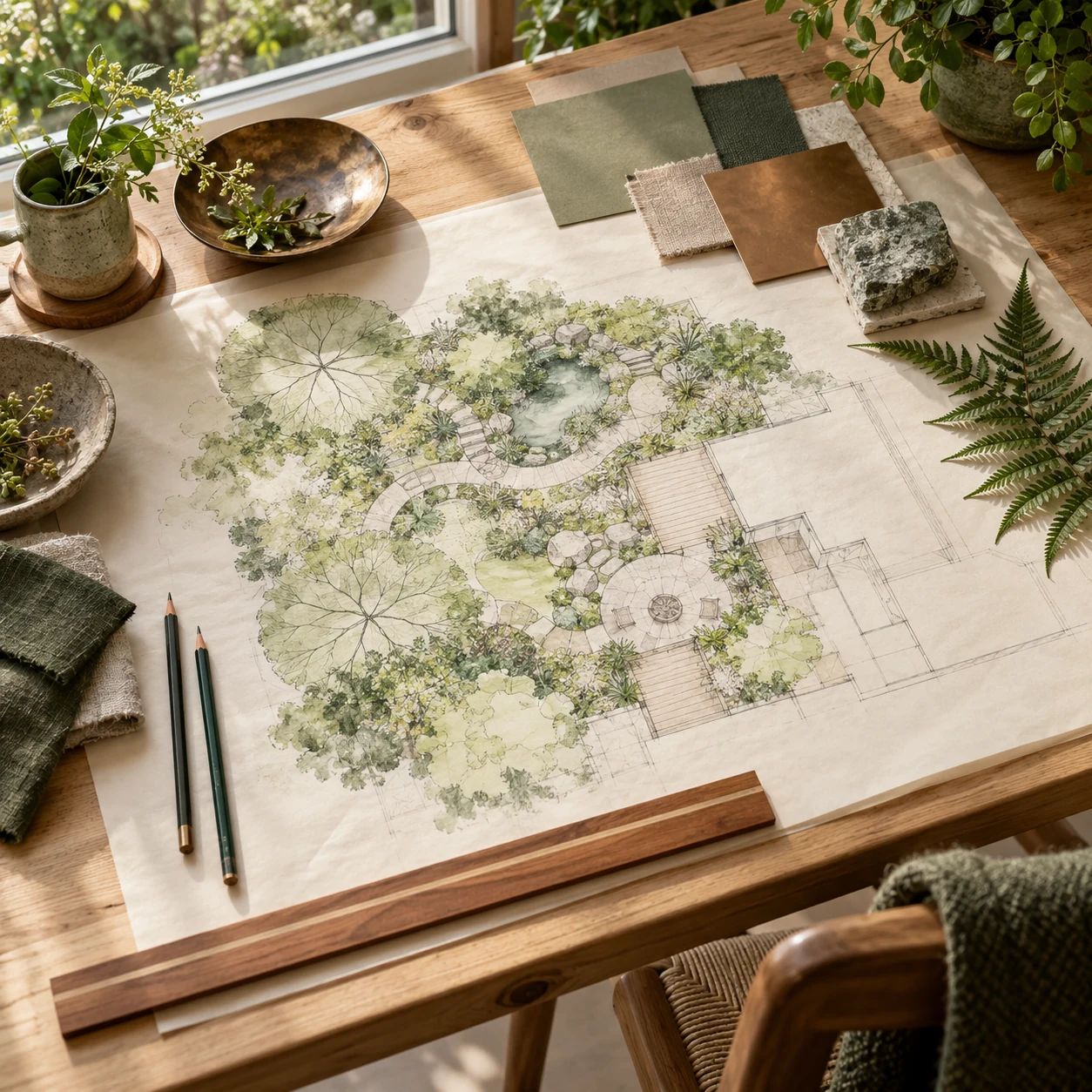
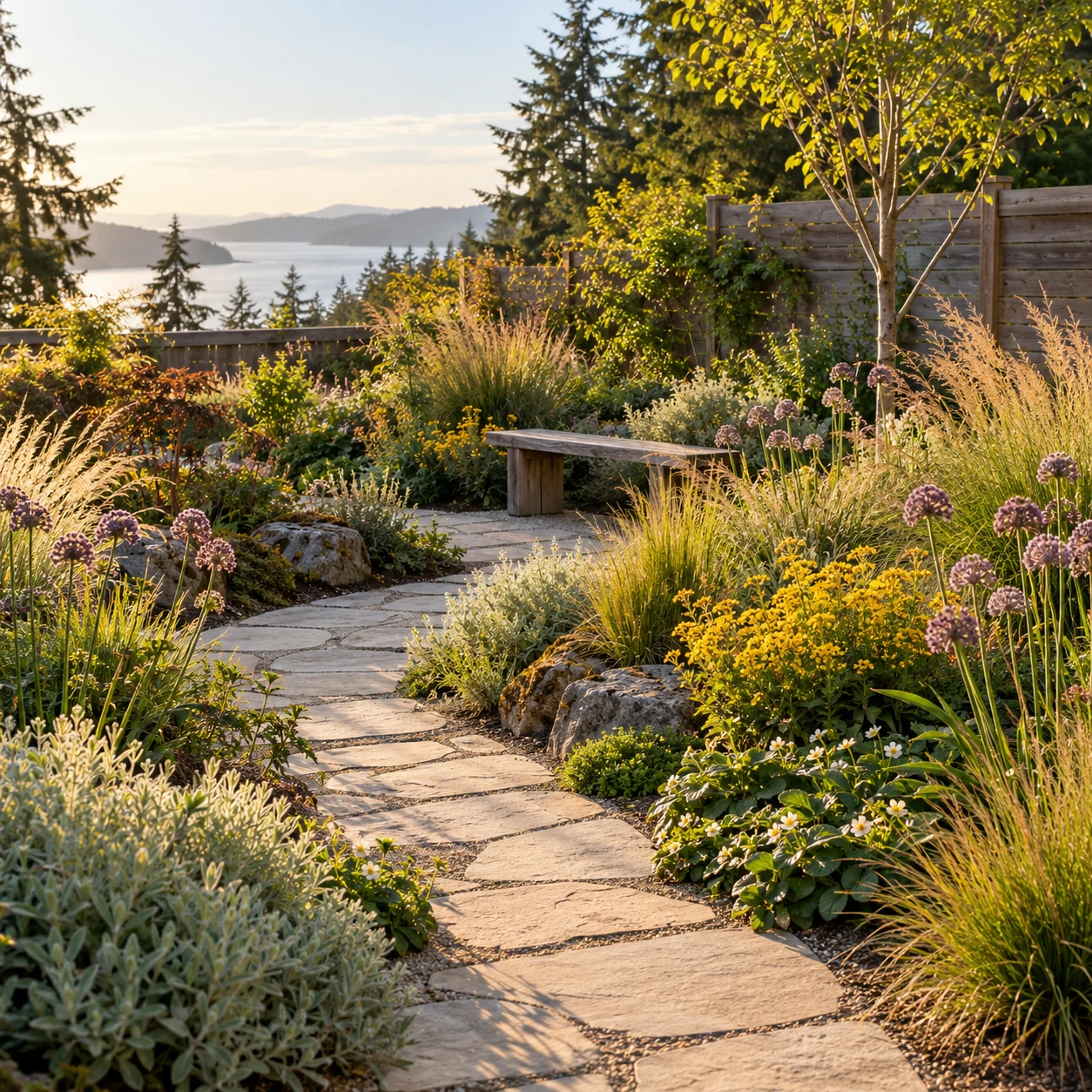
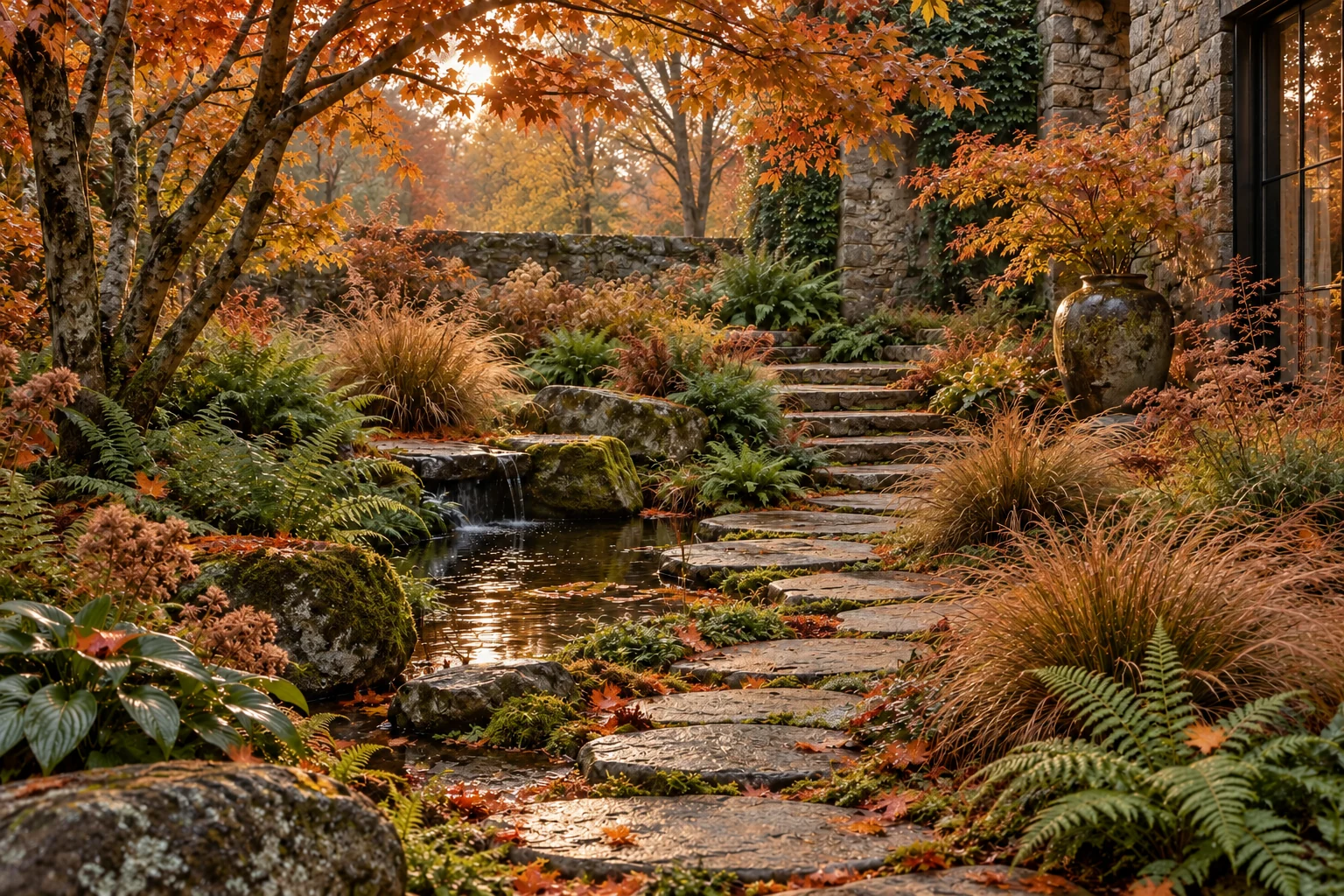
Our four seasonal courtyard views are illustrated studies of one imagined place. They show how a consistent layout can support different moods; they are not a record of a completed garden through a real year.