ONE GARDEN / FOUR CHAPTERS
A garden for
the whole year.
Follow the sheltered courtyard through four illustrated seasonal studies. The layout stays consistent while planting, light and atmosphere change.
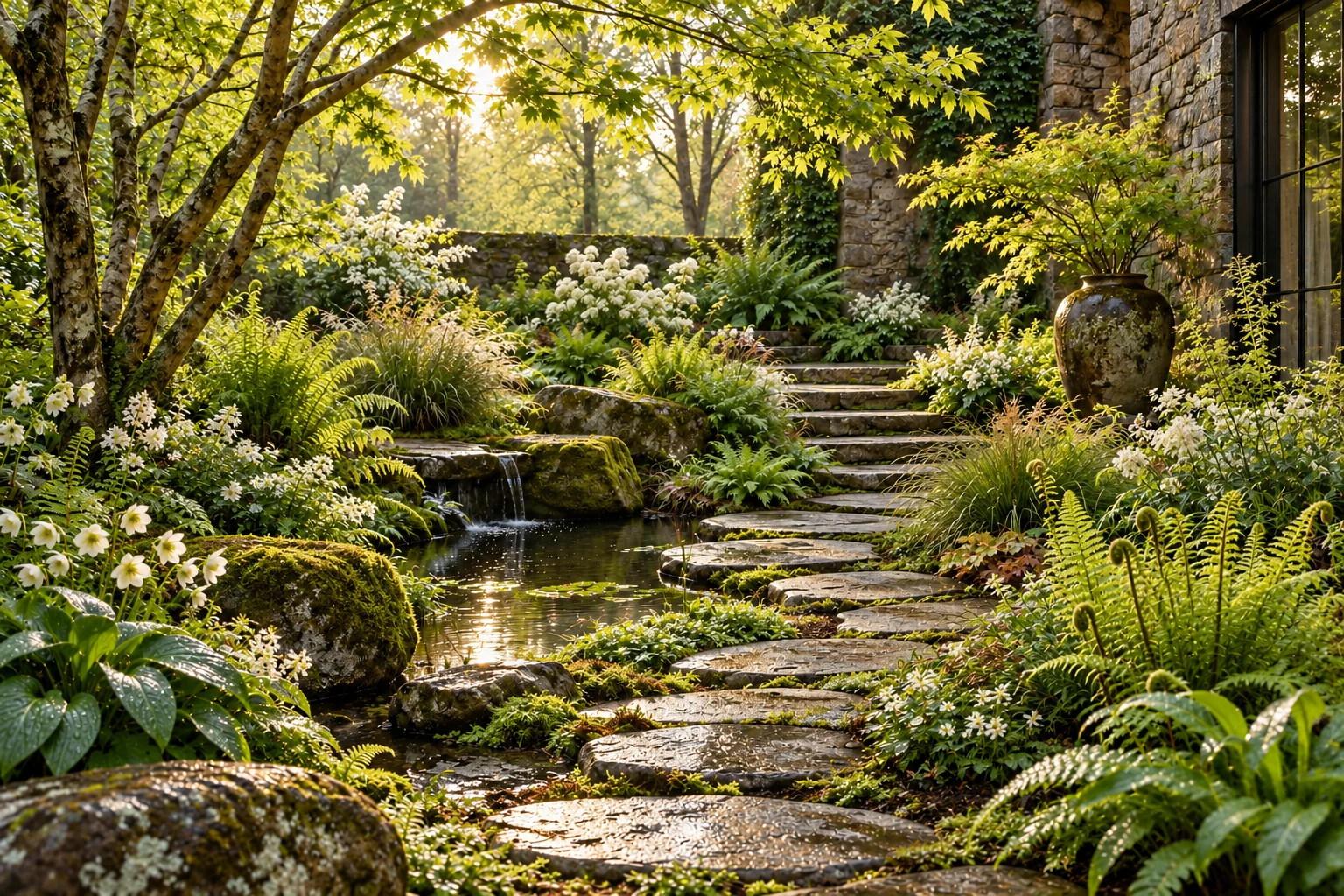
01 / SPRING
A quieter kind of awakening.
Fresh fronds and new leaves soften the stone. The design leaves space for early growth to be noticed, with evergreen structure holding the view together.
A few things to notice
- Observe where water gathers after rain.
- Check new planting and emerging growth.
- Leave room for the coming season’s spread.

02 / SUMMER
Somewhere to linger.
The planting becomes fuller and the seat more enclosed. Texture does the work: layered leaves, moving fronds and a path that stays readable.
A few things to notice
- Check soil moisture rather than watering by habit.
- Prioritize establishment care for new plants.
- Keep the route and sitting place clear.

03 / AUTUMN
Let the garden change.
Fallen leaves, warmer tones and lower light introduce another layer. The garden does not need to look like summer to remain useful and beautiful.
A few things to notice
- Keep slippery leaves off walking surfaces.
- Retain useful leaf litter in suitable beds.
- Notice gaps in the garden’s lasting structure.
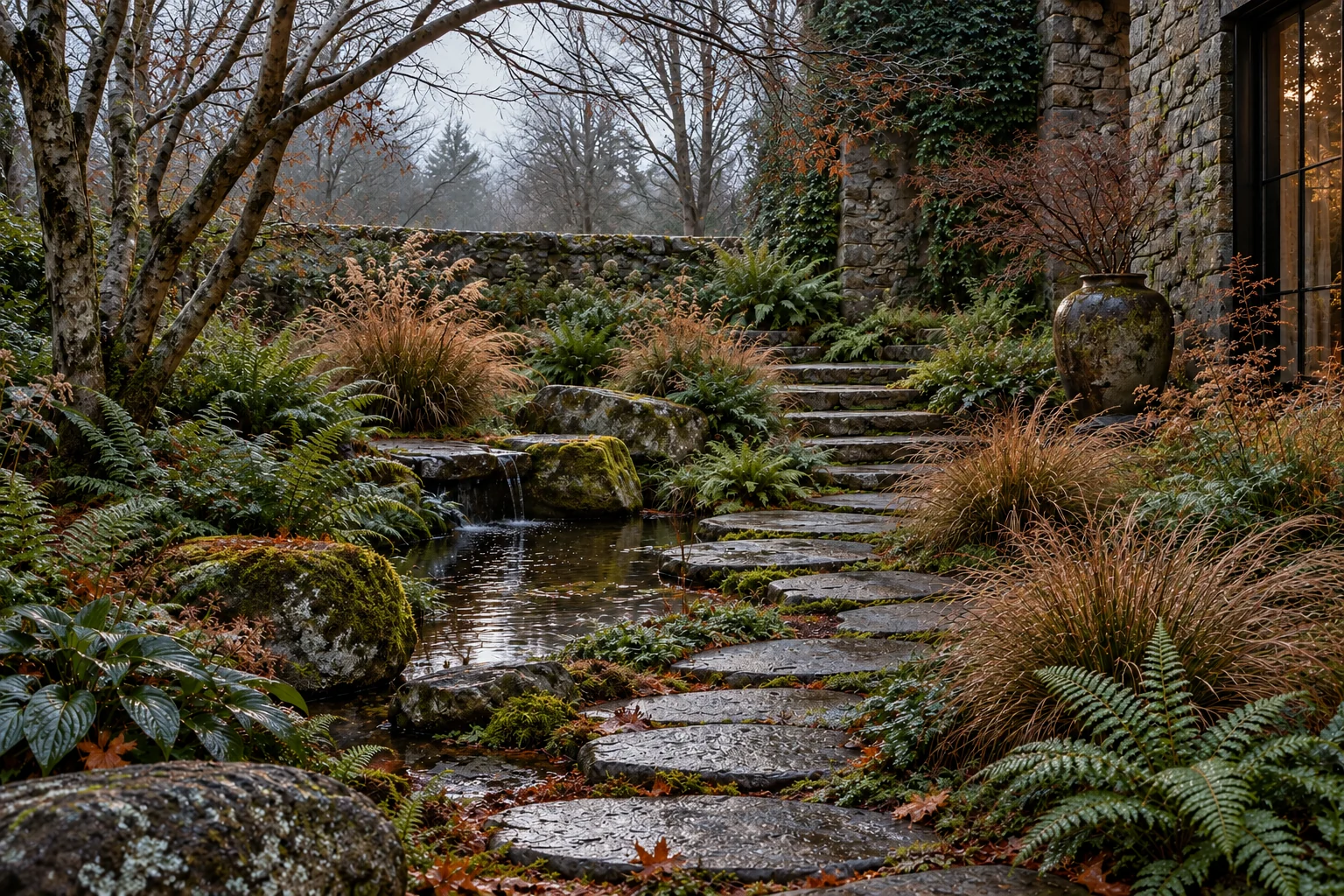
04 / WINTER
The bones of the place.
Stone, evergreen foliage and the enclosing edges become more prominent. This mild coastal winter study explores structure rather than a blanket of snow.
A few things to notice
- Observe drainage and exposure.
- Review the garden from the house.
- Plan changes before the next growing season.
STRUCTURE AND CHANGE
The same place.
Another chapter.
The path, sitting place and evergreen layers keep the scene legible. Seasonal detail can then change without asking every part of the garden to perform at once.
Care follows conditions.
These observations are not a fixed maintenance calendar. A real care plan responds to weather, plant age, species and the site itself.
Read the seasonal design note ↗YOUR OWN STARTING POINT
What would you
like to grow?
A few observations. A little inspiration. A useful place to begin.